
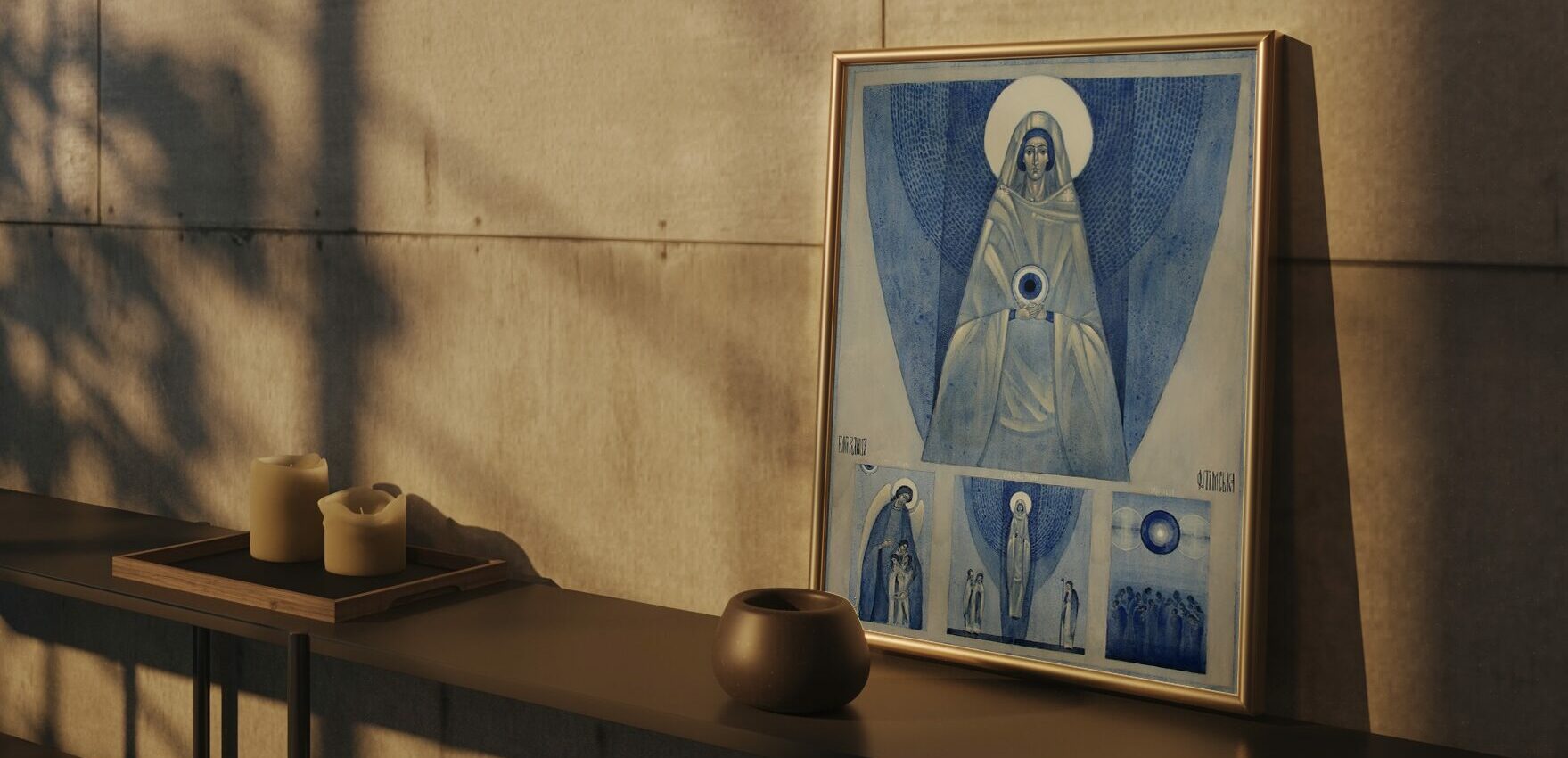
The icon market is full of reproductions that look like originals. The boundary between an original and its imitation is often deliberately blurred. Shops selling devotional goods and online platforms offer dozens of models, sold with certificates of authenticity. In photographs, they look like genuine icons.
The line between a work of art and its industrial imitation is often invisible to the naked eye. Those who discover this tend to be people asking on internet forums about the value of their icon — only to find out they are holding a print glued to wood, artificially aged to look like an object with centuries of history. This article was written to name that line clearly. To show the differences and explain why a hand-painted icon belongs to an entirely different category.
Icon and imitation. A difference in the making.
Producing a reproduction of an icon is an automated, industrial process. All it takes is a high-quality photograph of the chosen icon. The image file is prepared digitally, the board painted, the print glued on and varnished. The whole process can be completed in a matter of hours. Some reproductions are additionally aged by applying a crackle medium that causes the surface to fracture. The visual effect resembles the natural ageing of a genuine icon, but it is only the coating applied over the print that cracks. Any gilding, if present, is done with schlagmetal — an alloy of metals imitating gold. Every copy is identical to the previous one. This is the logic of serial production, not of artistic craft.
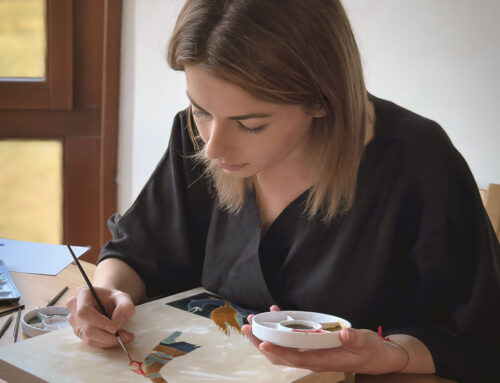
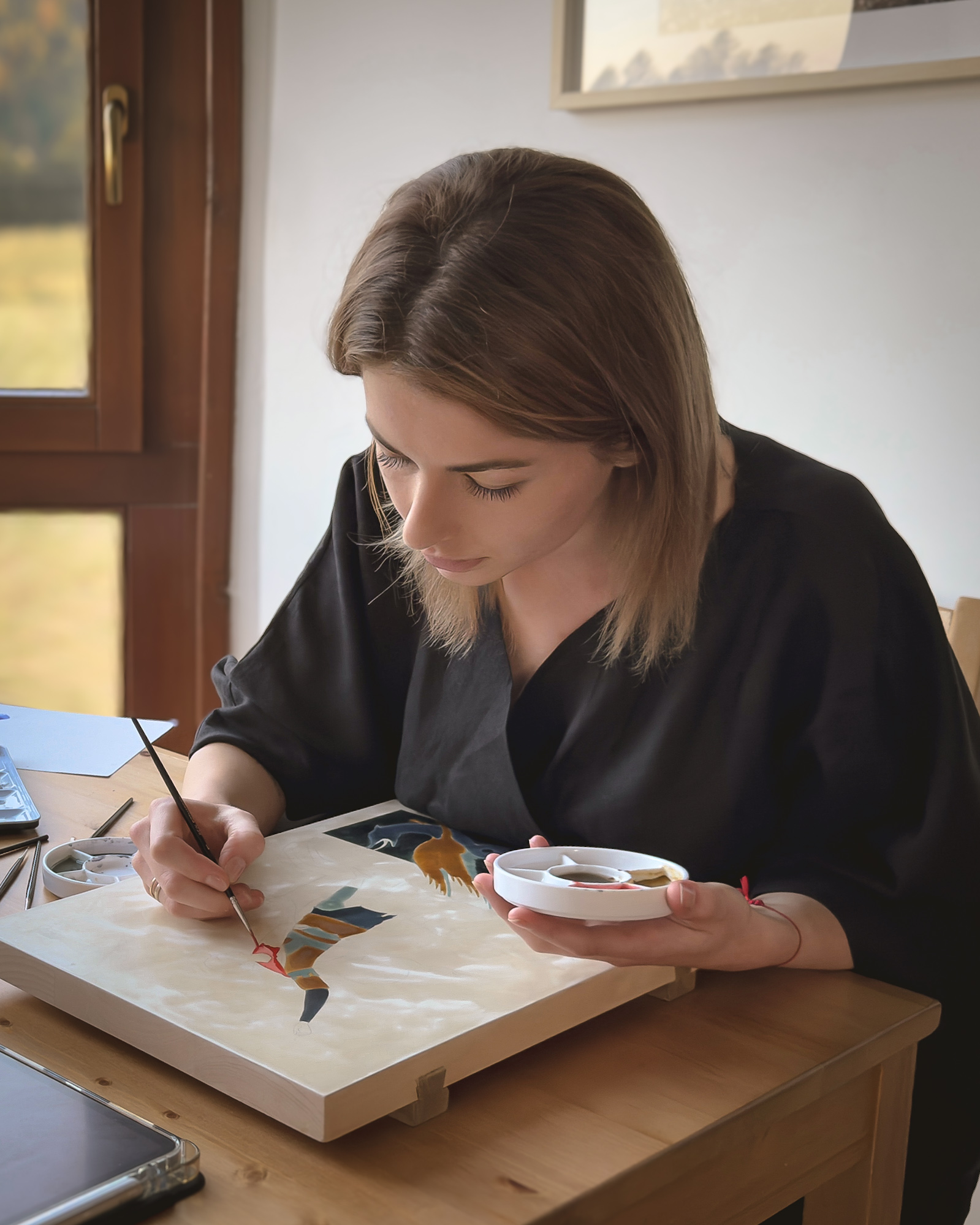
A hand-painted icon takes many days to complete. The process begins with choosing a wooden support — seasoned timber, properly prepared, often reinforced with wooden splines to prevent warping caused by changes in humidity. The board is prepared by bonding a layer of cotton fabric to its surface and applying over a dozen coats of levkas, a dense chalk-and-glue paste. This ground is hand-sanded to a smoothness close to ivory. Only then does the drawing appear, followed by the painted layer.
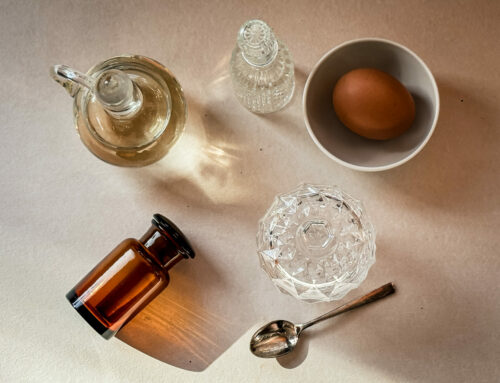
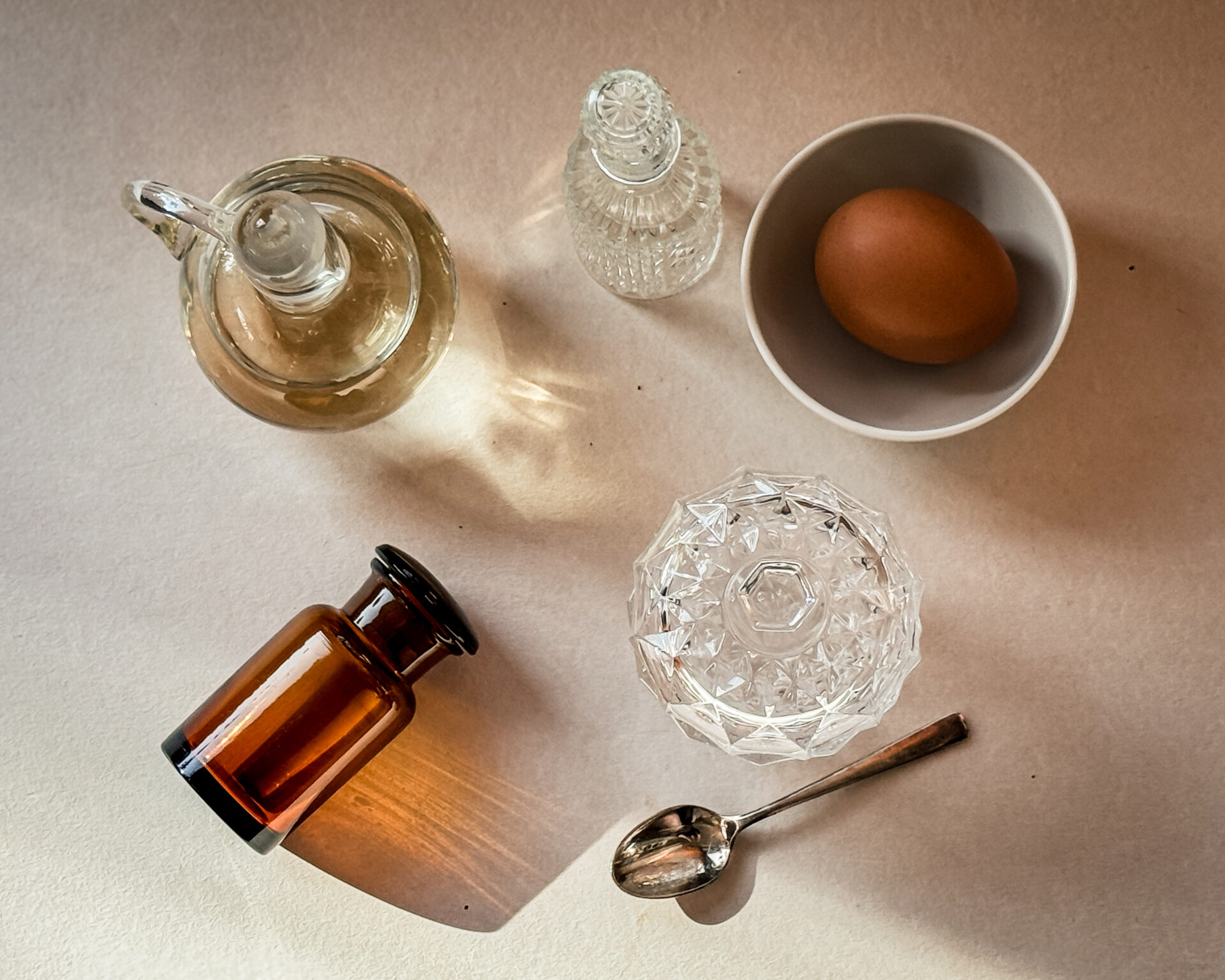
The binder for the pigments is an emulsion of egg yolk, white wine, and a little vinegar. This technique, known as egg tempera, has its roots in the Middle Ages. It dries quickly, which makes modelling form difficult and demands precise, deliberate work — there is no possibility of freely blending tones on the surface. As each layer dries, the colour lightens, requiring the painter to anticipate the final result from the very first application. The painted layer is built up in a glazing technique, through successive thin, transparent coats of paint. Each glaze demands time and precision.
Original icons rarely involve schlagmetal. Out of respect for the work and the craft behind each icon, artists use precious metals — most commonly gold leaf of varying carat. The gold is laid onto a bole, a specialised adhesive ground, and burnished with an agate stone to a high shine. This is a technically demanding process requiring both knowledge and skill.
What a photograph cannot show
A photograph of a hand-painted icon and a photograph of a print can look almost identical. This is why it is so easy to be misled when buying online.
An icon has texture and depth that only become visible in raking light: subtle traces of the brush, nuanced tonal transitions, areas where the paint layer is thicker and areas where the levkas shows through beneath it. It also has its own character — one that emerges in the process of painting and cannot be fully planned in advance. Every icon is unique.
When someone holds an icon for the first time, they begin to understand what sets it apart from a reproduction. The weight of the board, the texture of the surface, the substance of the object: wood, chalk, minerals, gold. This is a dimension that exists only in direct contact with an original work of art.
Quality and longevity across generations.
The oldest icons painted in egg tempera that have survived to the present day date from the sixth century. They can be seen at the Monastery of Saint Catherine in Sinai — one of the few places that escaped the iconoclasts. During the eighth and ninth centuries, the deliberate destruction of icons by Byzantine emperors deprived the world of an enormous part of this heritage. The icons that survived are a testament to the durability of the materials and the technique in which they were made.
The longevity of a hand-painted icon makes it an object for generations, not just years. Passed from one person to the next, it can become part of a family’s history. A print on paper glued to MDF will fade and warp within a decade or two. A hand-painted icon ages differently — and its value grows with time.
Three categories worth distinguishing
On the market for sacred art, objects from entirely different categories are sold side by side, often under the same name.
A hand-painted icon is a unique work: an original piece of art with a specific maker and an irrepeatable process behind it. Each one is one of a kind. Its value lies in the process, the knowledge, and the decisions the iconographer makes at every stage of the work.
IAlongside hand-painted icons, there exists a broad category of objects that imitate them. These come in many forms: a print on paper transferred onto a wooden board or plywood, a print on canvas stretched over a frame. Boards and plywood are sometimes deliberately aged using crackle medium. Gilding is done with schlagmetal. Every piece is identical to the last. A producer’s description may speak of hand-finishing and unique technology, but the technology of transferring an image onto wood is simply a print transfer — and the hand-finishing refers to the frame or the gilding applied over a mass-produced image.
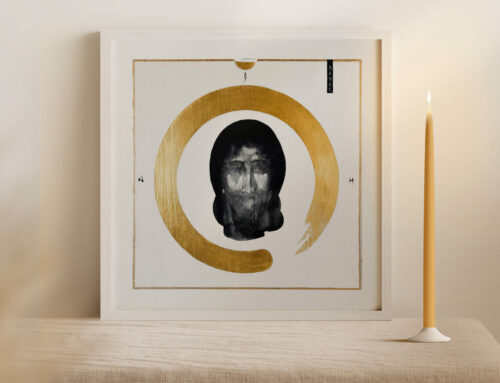
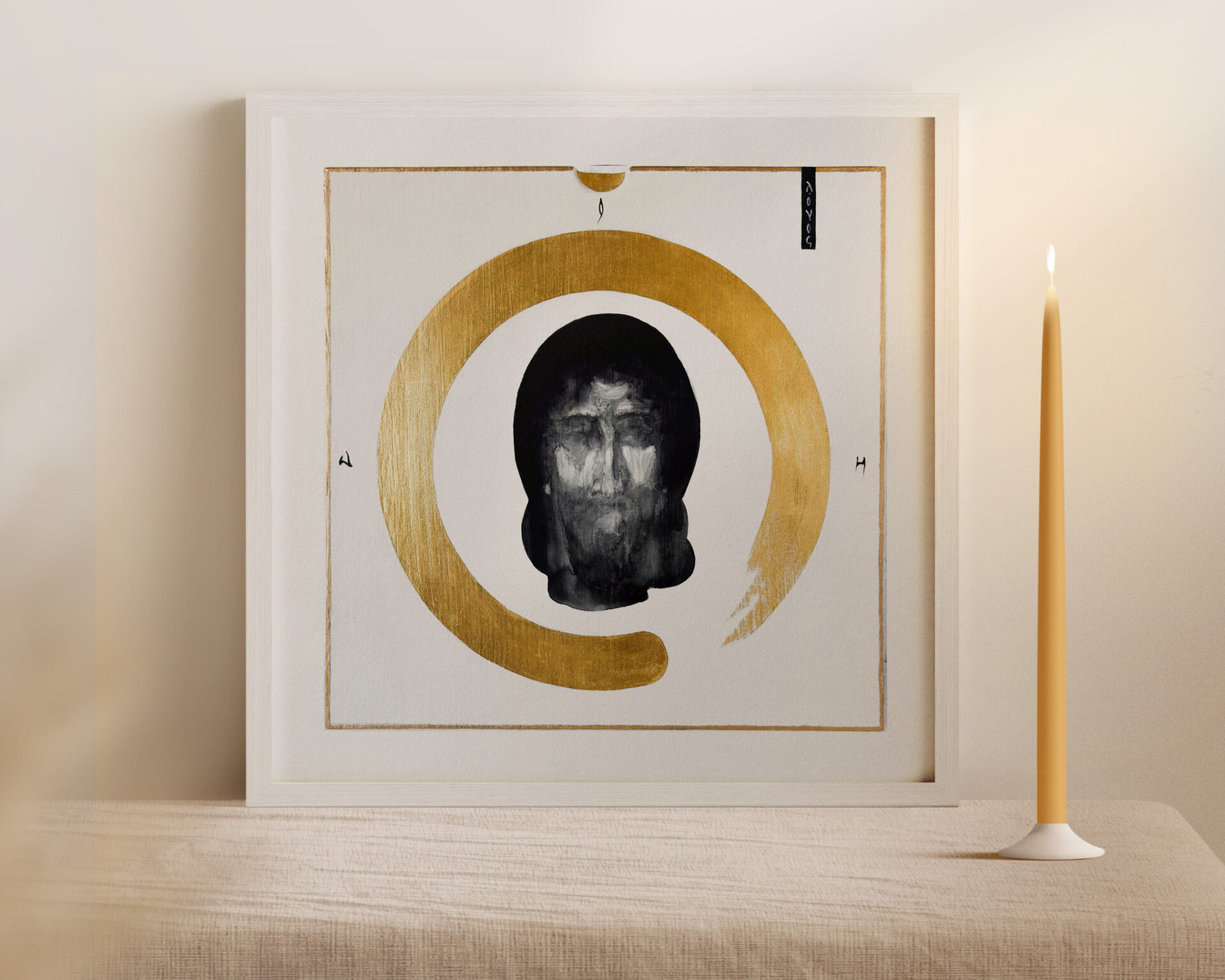
A separate category is the inkograph — a form of fine art reproduction widely used in the art world, offering the possibility of owning a work in the form of a high-quality collector’s print. Unlike an icon imitation, an inkograph does not pretend to be an original, nor does it imitate a physical painted object. In my Atelier, they are issued as limited editions on museum-grade paper. The prints are made with archival pigments, and each copy is signed and numbered. It is a considered form of access to a work of art, rooted in the tradition of the artist’s edition.
The distinction between these categories matters — both for the buyer and for the integrity of the market.
What this means for the space you live in
The choice between an original and a reproduction depends on many factors. Artistic sensitivity is a personal matter — it develops over time, shaped by experience and by contact with art. Budget plays an important role too. An icon imitation is the least expensive option, but also the least justified from the point of view of artistic value. An inkograph, as a limited edition, is a natural intermediate step for those who value authenticity but are not yet ready to invest in an original.
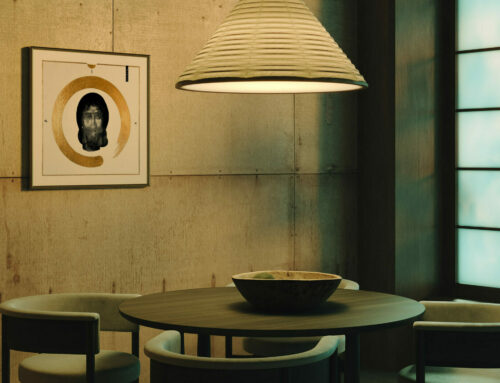
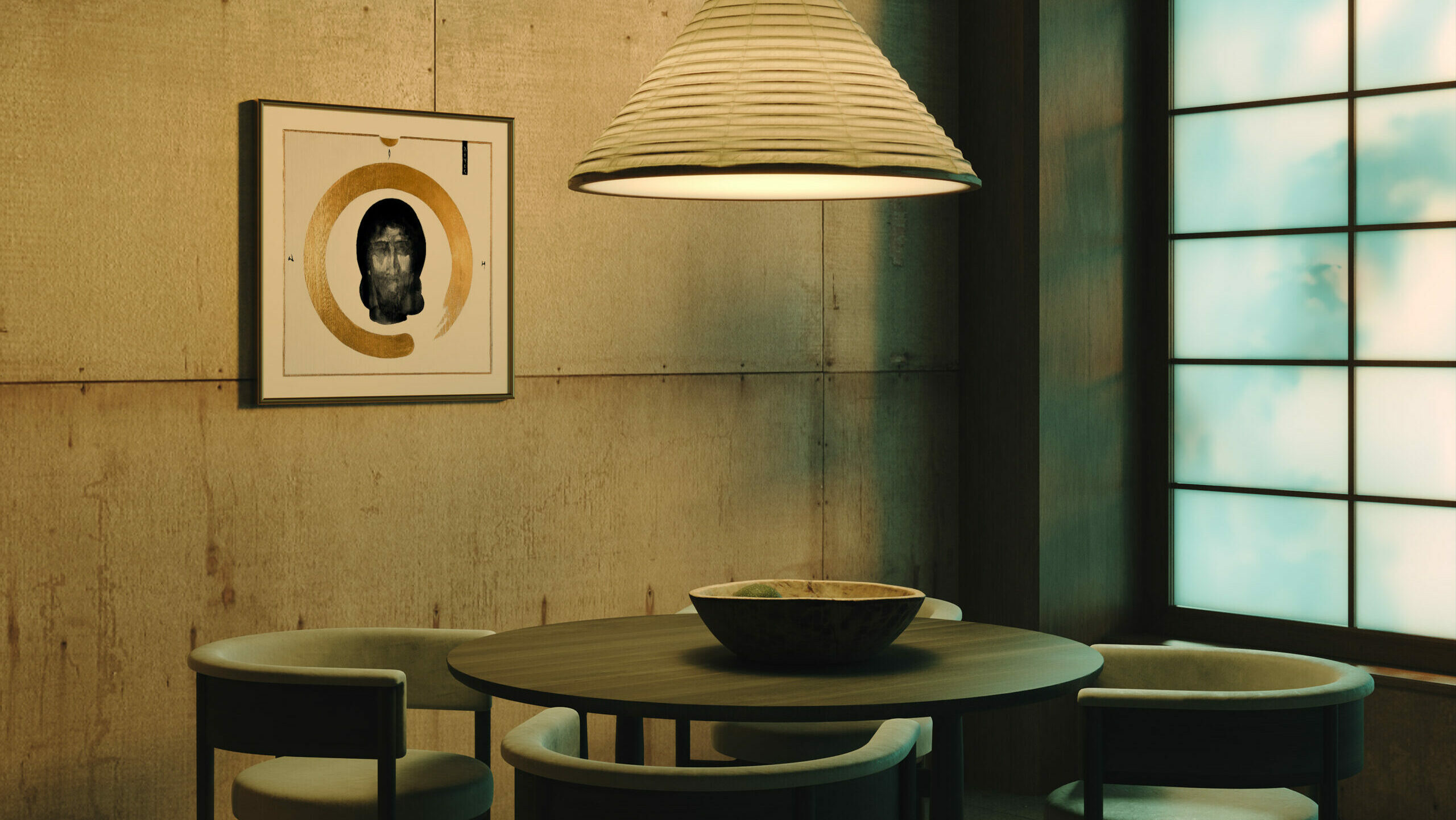
An original icon acts on a space differently from its imitation. It brings into an interior something that no reproduction can achieve: a work of art with its own history and its own maker.
A hand-painted icon changes the character of a room. Its power comes from the knowledge and attentiveness the artist brings to every stage of the work. Every work of art carries an aura — a presence left by its creator. This is something that cannot be replicated through mechanical reproduction. In contact with an original, that difference is felt.
How to tell an icon from a reproduction
Price. A low price is the first sign that you are looking at a reproduction. A hand-painted icon on a wooden board, covered in genuine gold leaf, made by an experienced iconographer, costs significantly more than a few dozen zlotys.
Surface texture. In natural light, a print is perfectly smooth and even. A hand-painted icon has a subtle texture: traces of the brush, variation across the surface, and in places, visible layers of paint.
Gilding. Gilding on reproductions is done with schlagmetal or gold paint. Schlagmetal may be applied by hand, but its shine is flat and uniform — and it changes colour over time. Genuine gold applied using traditional methods has a noble tone and appearance that no substitute can replicate. It does not oxidise and does not change with the passage of time.
Transparency of process. Every reputable atelier describes how its icons are made: what materials are used, how long the process takes, and what technique the artist works in. If this information is absent, it is worth asking.
In closing
Making a conscious choice in the world of sacred art begins with knowledge. The icon market lacks transparency, and the boundary between an original and an industrial reproduction is often deliberately blurred. The more we understand about how an icon is made and in what technique, the harder it becomes to settle for a substitute. Developing artistic sensitivity and familiarity with the world of sacred art shapes the quality of the choices we make. The objects we bring into our spaces reflect what we understand by value and beauty. The art we choose to live with is not neutral. It defines the character of a place and the way we inhabit it.
If you would like to learn more about how icons are made in my Atelier, I invite you to read the post on the icon-making process. For questions about a specific icon or the process behind it, please feel free to get in touch.

Leave A Comment